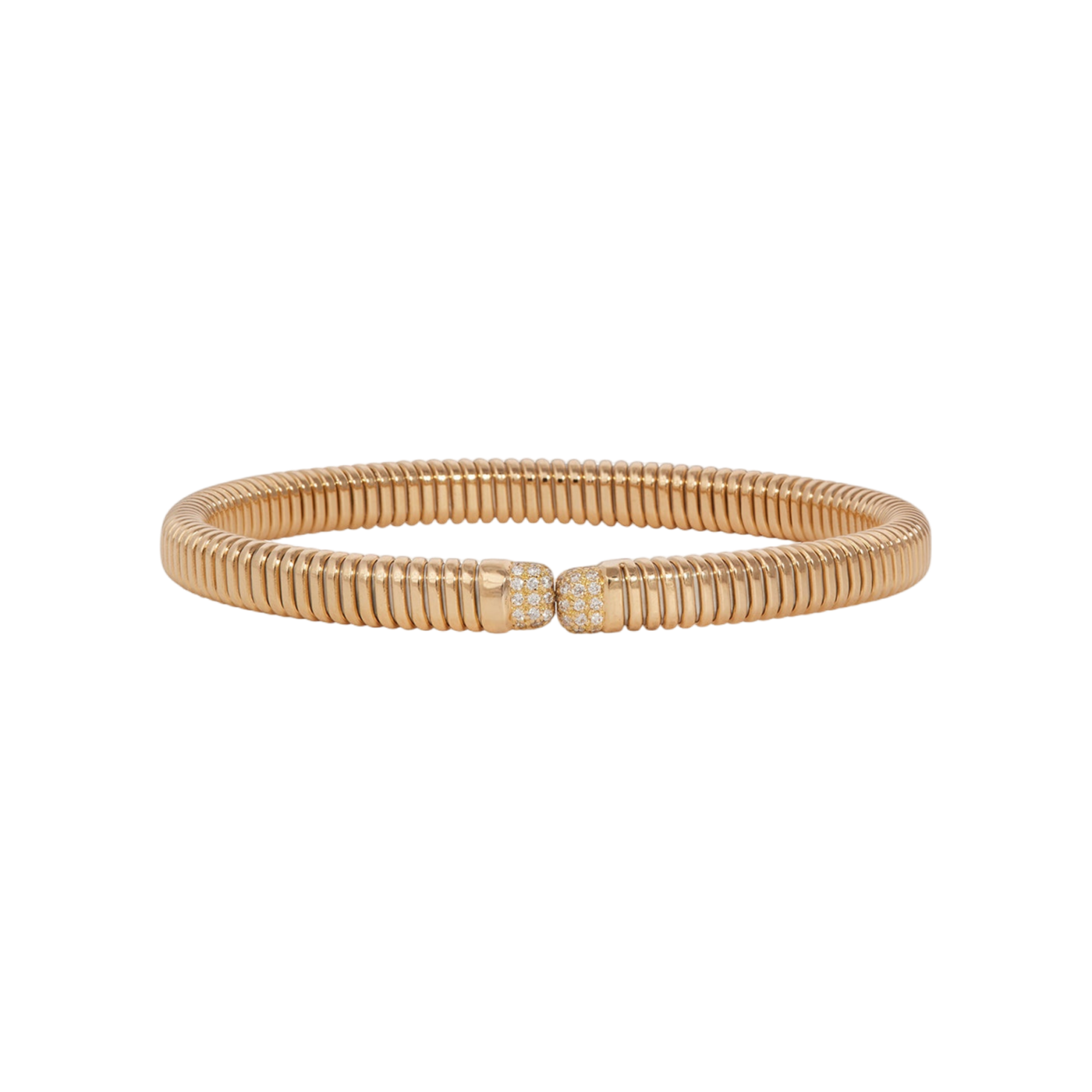
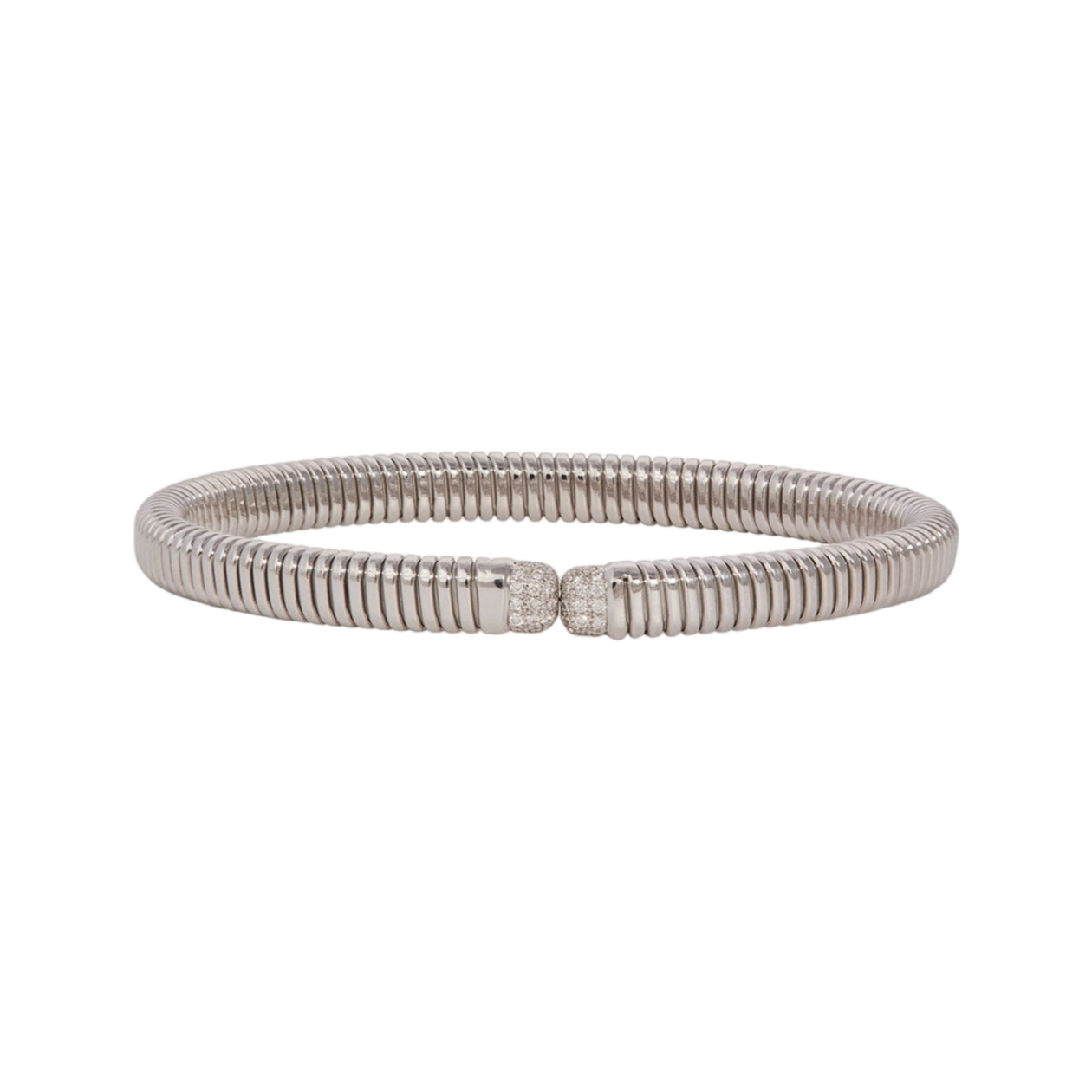
The Bettina Bracelet: Tubogas Gold, Kissed with Diamonds
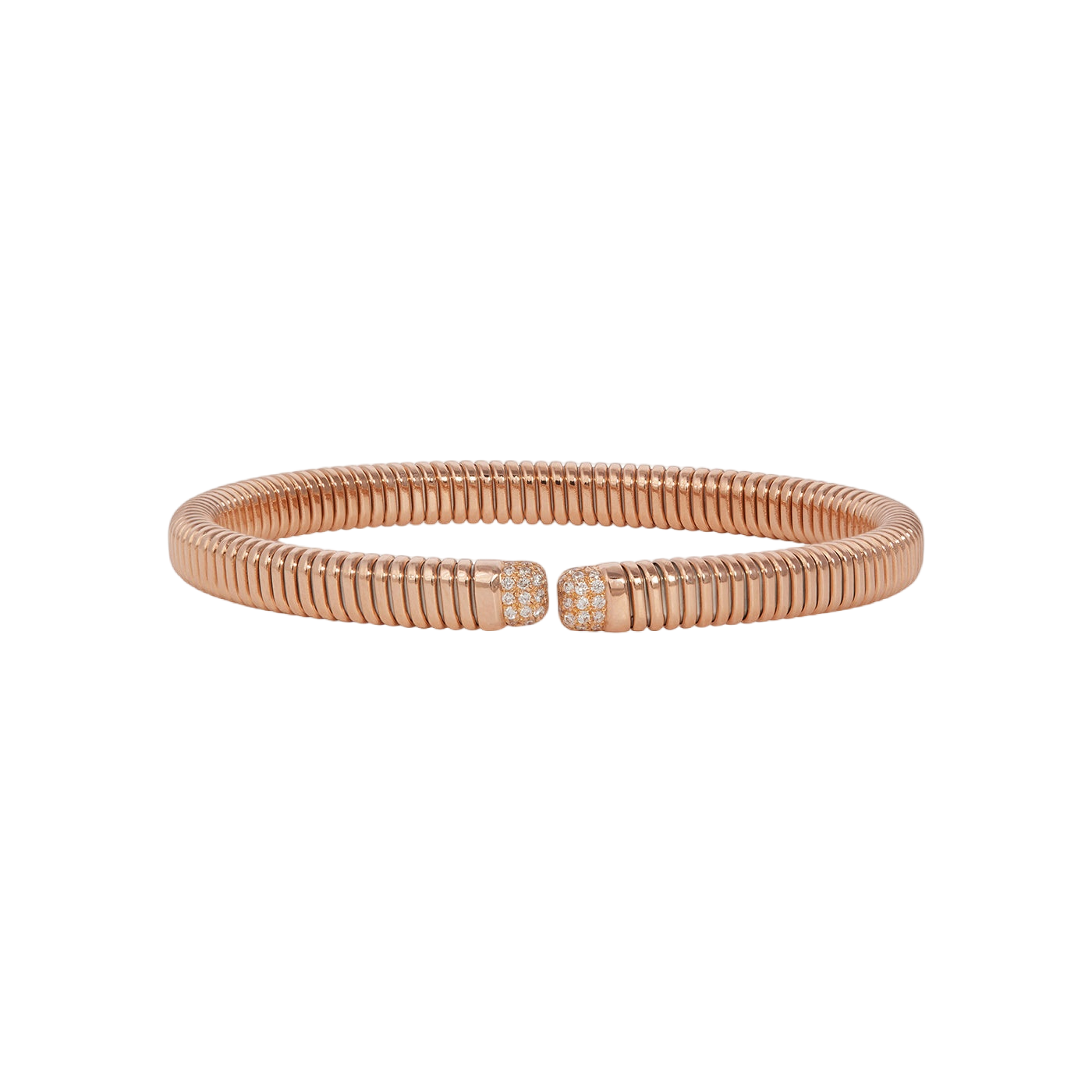
Discover the Bettina Bracelet, Sidney Garber's narrowest expression of tubogas — the century-old Italian technique of coiling two interlocking strips of gold into a hollow, spring-like tube. The result is a band that flexes like fabric yet holds its shape like fine metal: a narrow band of gold Tubogas, punctuated with diamonds at the tips. Wear it alone for quiet polish, or stack it three and four deep — which is exactly how most Sidney Garber clients choose to wear it.
An Italian Technique, Reimagined
Tubogas isn't cast in a single pour — it's wrapped by hand, coil by coil, which is part of why it remains a craft born in Italian workshops rather than something produced on a larger, mechanized line. That coiled structure is also what gives the Bettina its signature ease: it moves with the wrist instead of resisting it, and asks for no clasp to hold its place.
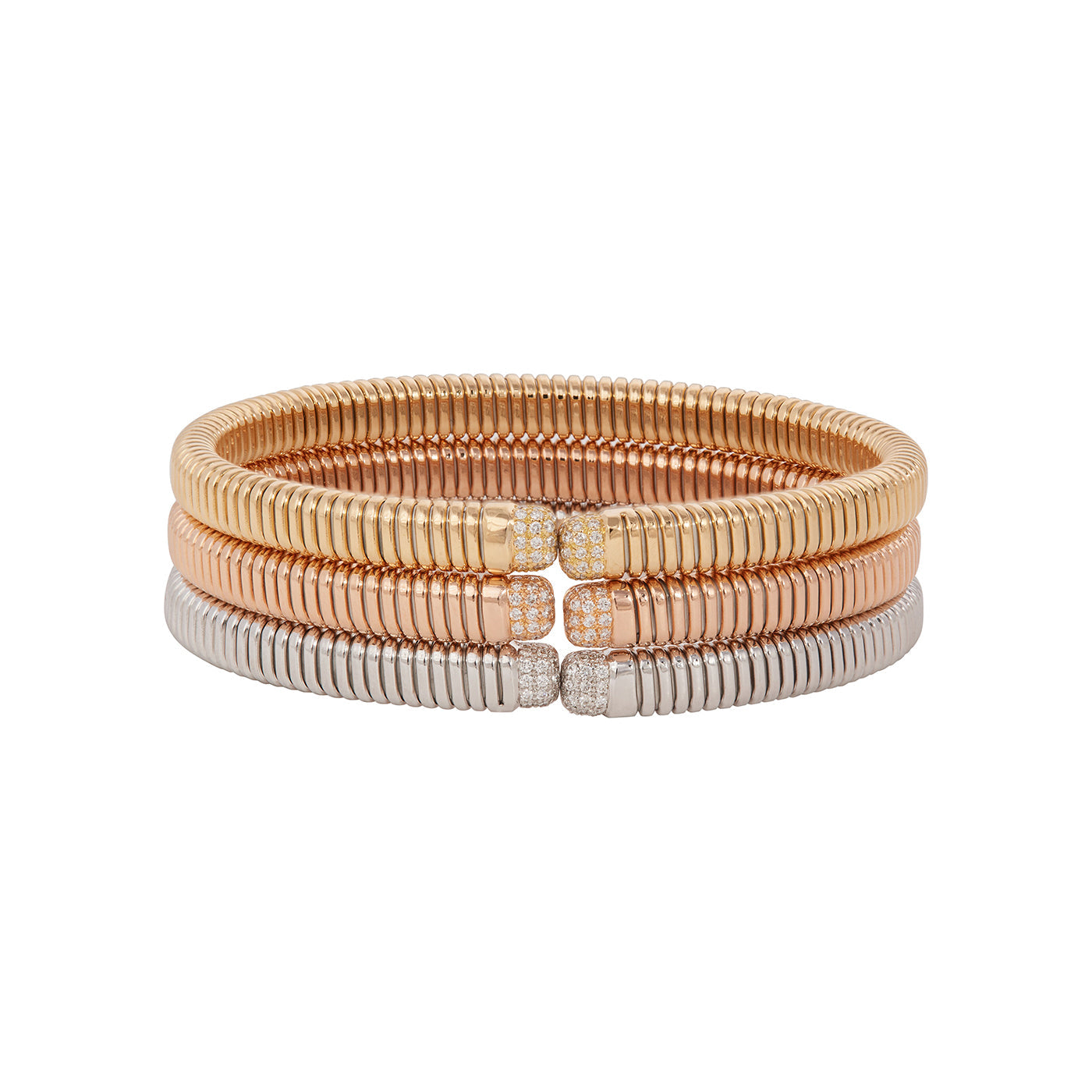
Compare Our Three Golds
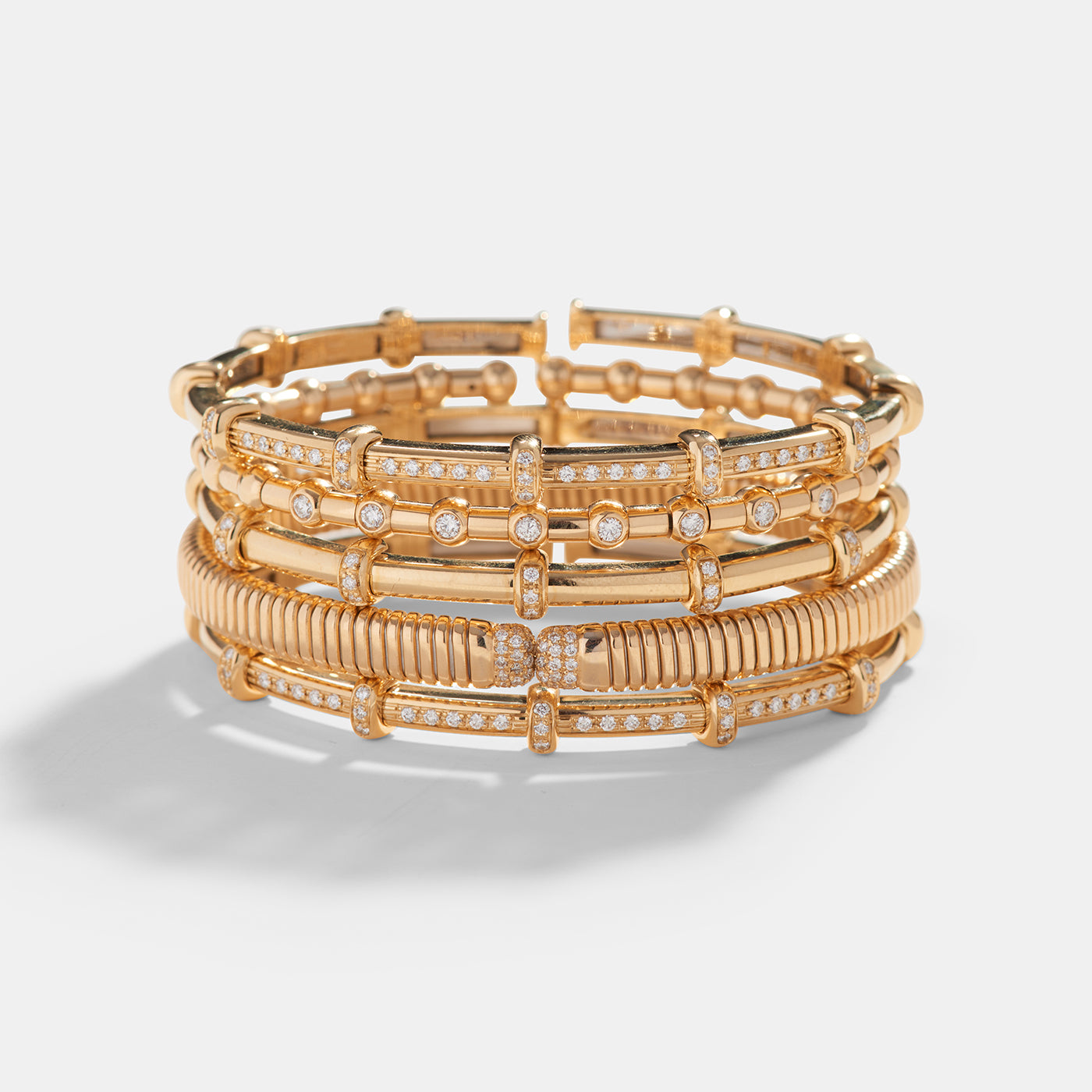
An Entry Into the Art of the Stack
The Bettina sits well below the diamond-heavy pavé bracelets elsewhere in the house's stretch collection, which makes it a favored first piece for clients beginning a stack rather than replacing one. Wear it in two golds and the wrist already reads as considered and layered — no single statement piece required to make an impression.
More Tubogas, More Options
The Bettina belongs to a larger family of tubogas pieces at Sidney Garber, including the original three-strand Rolling Bracelet the house first crafted in 1946 and a sculptural domed cuff in the same coiled construction — the full range lives on the Tubogas collection page. For a fuller, fully pavé alternative in the same no-clasp spirit, discover the Pavé Stretch Bracelets.
Luxury, at your fingertips. Sidney Garber marries a legacy in fine jewelry with the modern sensibilities of a woman who loves, lives in, and expresses her style with jewelry. Since 1946, the fine jewelry house has served the ateliers in Paris and Milan, the luxury-seekers in the United States, and the most esteemed craftsmen and designers in the world. Today, the name remains synonymous with elegance and craftsmanship.
Frequently Asked Questions
Q: What is tubogas construction?
A: Tubogas is formed by tightly coiling two interlocking strips of gold into a hollow tube, which is precisely what gives the Bettina its remarkable flexibility. It's handmade rather than cast — part of why the technique has stayed closely associated with Italian jewelry ateliers since it was first developed.
Q: Does the Bettina Bracelet have a clasp?
A: No. The tubogas band itself flexes enough to slip over the hand, so there's no clasp to open or fasten — the bracelet simply moves on and off the wrist.
Q: What sizes and metals is the Bettina available in?
A: It's handcrafted in 18k yellow, white, and rose gold, each set with 0.30 carats of diamonds at the tips, so the decision comes down purely to which gold speaks to you.